Guides
Moving a Childcare Centre or Private School in the Hills: Records, Privacy and Equipment
Child care centres and private schools are covered by the Privacy Act whatever their turnover, so on moving day the enrolment, medical and staff records should travel separately, locked, backed up and in the director's or principal's hands, while the cots, small furniture and play equipment go on the truck.
By our count of the privacy regulator's own guidance, a childcare centre or private school can lose personal information on moving day in five different ways: a box of paper files, a computer, a USB stick or portable drive, a backup nobody took, and a records crate handed to the wrong person.
Here is the working. The OAIC's APP 11 guidance says "loss" includes physically losing hard-copy documents, computer equipment or portable storage devices. That makes three. The same page counts electronic loss too, such as failing to keep adequate backups. That makes four. The OAIC's breach page lists personal information mistakenly given to the wrong person as an example. That makes five.
Each one is a moving-day risk. The turnover exemption most small operators rely on doesn't protect you here, because the OAIC lists child care centres; private schools among the businesses the Privacy Act covers.
The practical answer is simple. The records travel separately: locked, labelled, backed up, and with the director or principal. The truck carries the cots, chairs, tables and play equipment. This guide from Castle Hill Removals sets out how to keep those two loads apart.
Moving day can lose records in five ways
- Box of hard-copy filesOAIC: loss (APP 11)
- Computer equipmentOAIC: loss (APP 11)
- Portable storage device (USB, drive)OAIC: loss (APP 11)
- Backup never takenOAIC: loss (APP 11)
- Records handed to the wrong personOAIC: NDB breach example
Source: OAIC
None of the five needs anyone to be careless. They happen because a move puts paper, devices and people in motion at the same time. A filing box gets stacked with the craft supplies. A laptop gets packed in a tub of cables. A helpful parent carries a crate to the wrong car. Planning for each of the five is cheaper than explaining any of them afterwards.
Does the Privacy Act cover a childcare centre or private school?
Q1Turnover $3 million or less? (checked November 2026)
Most small businesses: not covered
Q2Is it a health service provider?
Covered whatever the turnover: includes child care centres; private schools and private tertiary educational institutions
Must comply with the Australian Privacy Principles
Yes, whatever your size. The Privacy Act does not cover most small businesses, meaning those with turnover of $3 million or less (checked November 2026). It does cover any business that is a health service provider, whatever its turnover.
The OAIC's checklist says health service providers include child care centres; private schools and private tertiary educational institutions, alongside private hospitals, medical practitioners and allied health professionals. A covered business must comply with the Australian Privacy Principles (the APPs).
A common assumption gets this wrong: the turnover threshold does not exempt child care centres or private schools.
New South Wales adds its own law. The Health Records and Information Privacy Act 2002 applies to private sector organisations that are health service providers or that collect, hold or use health information. It sets out 15 Health Privacy Principles covering how that information is collected, stored, used and disclosed.
Whether it applies to your centre or school is a question to put to the NSW Information and Privacy Commission or your adviser. Bring your allergy plans and medication records into that conversation, and settle the answer well before the boxes come out.
What to do with children's records when you move
Old building
- Filing cabinet and server or laptop
- Backup taken and verified
- Locked labelled records crate
- Director's or principal's car
- Locked room at the new site, counted in
Off-site store or cloud: still yours to protect
- Cots, small chairs, tables, play equipment and kitchen kit
- Removal truck
- Rooms at the new site, labelled by room or age group
New building
Source: OAIC
APP 11 asks for reasonable steps to protect personal information from misuse, interference and loss, and from unauthorised access, modification or disclosure. The steps expected rise with the amount and sensitivity of the information held. Children's medical notes, allergy plans and incident logs sit near the top of that scale, so plan for them first.
| Record type | Where it travels | Before the move |
|---|---|---|
| Enrolment forms | Locked crate, with director or principal | Check what can be destroyed |
| Medical and allergy information | Locked crate, with director or principal | Copy for first day at new site kept secure |
| Incident logs | Locked crate, with director or principal | Do not destroy anything a law requires you to keep |
| Staff files and the accreditation and WWCC register | Locked crate, with director or principal | Register up to date |
| Computers and drives | With director or principal, never on the truck loose | Backup taken and verified |
| Archive boxes off-site or cloud records | Stay where they are unless planned | Still your responsibility |
Source: OAIC, NESA
Our view is that these records should never ride in the general load. Instead:
- One person owns them. The director or principal, or someone they name in writing, carries the records and the devices.
- Lock and label. Use lockable crates and label them with a code ("Crate 3 of 7") rather than the contents. A crate marked "Medical" tells a stranger exactly what to pick up.
- Count out, count in. Write down how many crates and devices left the old site, and tick each one off at the new site.
- Back up first. Take backups before anything is unplugged, then check they open. Our office relocation IT checklist covers the backup and internet side in more detail.
Records you don't physically move are still yours. An entity holds information it has the right or power to deal with, even if a third party stores it. That means archive boxes at a storage unit, or files in a cloud account, stay your responsibility through the move.
A move is also a natural time to clear out. When information is no longer needed, an organisation must take reasonable steps to destroy or de-identify it, except where an Australian law or a court order requires it to be kept. Destruction covers all copies, including archived and backup copies.
Childcare and school records have retention periods set by other laws. Confirm yours with your regulator or adviser before anything goes in the shredding bin.
The privacy checklist for moving day
Source: OAIC, NSW Information and Privacy Commission
The OAIC's examples of reasonable steps include securing access to premises, encrypting data, strong passwords, staff training and written procedures. On a moving day, each of those becomes something concrete:
- Premises: name who holds keys at both sites, and write a move-day access list. Old and new buildings both have open doors for hours.
- Written procedure: keep it to one page covering who carries the records, where they go, and who to call if something is missing.
- Staff training: brief educators or teachers on that page the week before, not on the morning.
- Devices: check encryption and passwords before laptops and drives travel. Our guide to securing a small office after the move picks up the router, guest Wi-Fi and MFA once you arrive.
If a box or laptop goes missing on moving day
- 1ContainLost device or crate: call the director, retrace the route
- 2Evaluate
- 3NotifyAffected individuals and the OAIC, when a breach is likely to result in serious harm
- 4Review
Source: OAIC
Under the Notifiable Data Breaches scheme, a covered organisation must notify affected individuals and the OAIC when a breach is likely to result in serious harm. The OAIC's own examples read like a moving-day list: a lost or stolen device with personal information, and personal information given to the wrong person.
The OAIC's plan for health service providers has four steps: contain, evaluate, notify, review. Agree before the move who starts step one, and keep their number on the one-page procedure. If a crate is missing, you want someone retracing the route within minutes, not someone else finding out at the end of the day.
Moving a childcare centre: cots, small furniture and play equipment
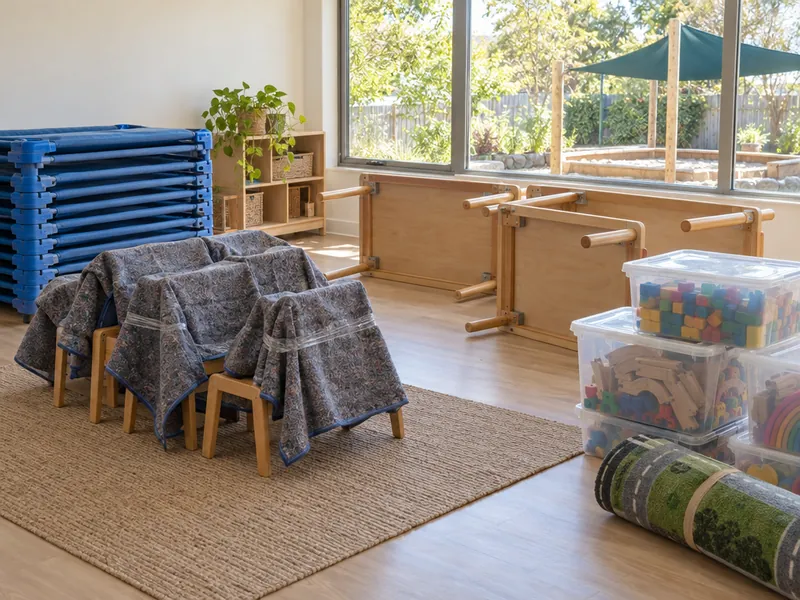
This is the part of the job a removalist knows best, and it rewards planning by room.
- Walk through both sites. Measure doorways, corridors and the path from the kerb, and check where the truck can stand. Note anything fixed to walls or the ground.
- Label by room or age group. "Babies room", "Toddlers", "Preschool" on every box and piece of furniture means the new rooms can be set up in the order you will open them.
- Cots and bedding. Fold or dismantle cots, and keep each cot's bolts in a bag taped to its frame. Bag bedding separately so it stays clean.
- Small furniture. Child-height chairs and tables stack well but scuff easily, so wrap them in blankets.
- Outdoor play. Empty and cover sandpit items. Freestanding climbing frames and cubbies are often easier to move in sections. Equipment fixed into the ground is a job for whoever installed it.
- Kitchen and laundry. Defrost fridges and freezers the day before, and drain washing machines.
An approved early childhood service also has its regulator to deal with. Contact them about the new premises before you set a moving date, and follow their guidance on what must happen before children attend at the new address.
Moving a school: NESA, staff registers and the holiday window
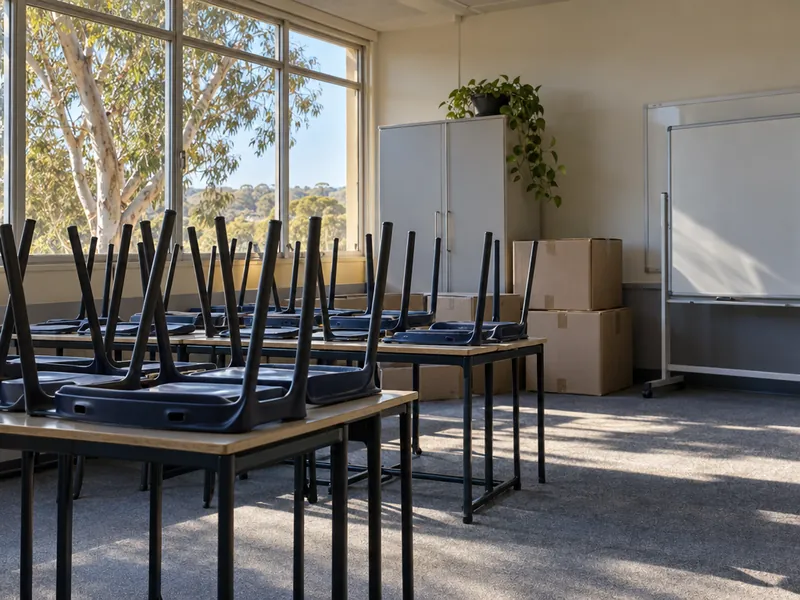
A relocating non-government school needs NESA's approval first. NESA says a new site cannot operate until NESA has approved it, and schools must notify NESA of their intention at least 6 months before opening, to allow for a document review and a site visit. The same page lists council approval for the site to operate as a school and a lease among the documents to gather. Other significant changes are notified through RANGS Online, with the full list and timeframes in section B2.6 of the Registration Manual. Settle NESA's timeline before you book a removal date.
Staff records need the same care as student files. Schools must have effective monitoring systems to keep every teacher's accreditation active, and NESA's common approaches include a central register of accreditation expiry dates, with Working with Children Check expiry dates tracked alongside. That register belongs in the principal's locked crate, and it should be complete on the first day at the new campus.
Timing does more for a school move than any amount of packing tape. A holiday break gives you empty rooms, quiet car parks and time to set up before students arrive. Our guide to moving in the NSW summer school holidays shows how busy that window gets. Book early if you want it, and only once NESA's approval timeline fits inside it.
The move on one page
- 1Most small businesses (turnover of $3 million or less, checked November 2026) are not covered, but health service providers are, whatever their turnover, including child care centres; private schoolsOAIC small business
- 2APP 11: reasonable steps against misuse, interference and loss; loss includes hard-copy documents, computer equipment, portable storage devicesOAIC APP 11
- 3Destroy or de-identify what is no longer needed, all copies, unless an Australian law or court order requires it keptOAIC APP 11
- 4Breach plan: contain, evaluate, notify, review; notify individuals and the OAIC when serious harm is likelyOAIC data breach plan; OAIC NDB
- 5Non-government school moving site: a new site cannot operate until NESA approves it; notify NESA at least 6 months before openingNESA
Five things to have settled before move day: whether you are covered (you are), how APP 11's reasonable steps apply to each crate, what you destroy and what a law makes you keep, your four-step breach plan, and, for a non-government school, NESA's approval of the new site, notified at least 6 months before opening.
Getting a quote for the carrying and the truck
Split the job in two before you call anyone. The records and devices are yours to carry. The furniture, cots, play equipment and kitchen kit are the load. When you know which rooms are moving, what is fixed and when your closure or holiday window falls, request a quote from Castle Hill Removals and describe the load room by room. Our office move checklist covers how we plan a commercial move around access at both buildings.
Sources
- https://www.oaic.gov.au/privacy/privacy-guidance-for-organisations-and-government-agencies/organisations/small-business
- https://www.oaic.gov.au/privacy/australian-privacy-principles/australian-privacy-principles-guidelines/chapter-11-app-11-security-of-personal-information
- https://www.oaic.gov.au/privacy/notifiable-data-breaches/about-the-notifiable-data-breaches-scheme
- https://www.oaic.gov.au/privacy/privacy-guidance-for-organisations-and-government-agencies/health-service-providers/data-breach-action-plan-for-health-service-providers
- https://www.ipc.nsw.gov.au/privacy/nsw-privacy-laws/hrip
- https://www.nsw.gov.au/education-and-training/nesa/school-regulation/resources-for-schools/school-registration-insights
- Pictures in this guide are illustrations, not photos of our jobs.
Ready for the walk-through?
Tell us about the house, the garage and the dates. We come back with the right crew, the real hourly rate and how the day runs. No phone tag, no obligation, and nothing is booked until you say so.